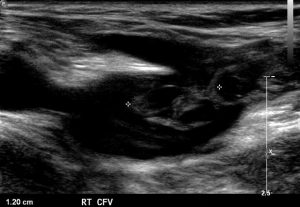
Venous thromboembolism in patients with thrombophilia

Anti coagulation for Peripheral Artery Disease

There are several instances to consider anticoagulation for peripheral artery disease. One, is to prevent future events. There are data that show that a small dose of rivaroxaban prevents major adverse cardiovascular events and major adverse limb events. These data also show that anticoagulation is particularly useful in patients after a vascular procedure. A second…

Read More

Surveillance after endovascular procedures for peripheral artery disease

There is surprisingly little data available to guide surveillance after endovascular procedures for peripheral artery disease. Simple things are not well described. Should a patient be seen frequently or only symptom based? Should some patient characteristics prompt more or less frequent visits? Is surveillance that relies on ultrasound and segmental pressures and pulse volume recordings…

Read More

Mesenteric artery stenting: Technical considerations

Chronic mesenteric ischemia can pose a diagnostic and technical challenge for the interventionist. Indications and patient selection for mesenteric artery stenting were covered previously here. This article will outline technical aspects of mesenteric artery stenting. Clinical Vignette A 74-year-old gentleman with a history of antiphospholipid syndrome and celiac artery stenosis treated with a single balloon-expandable…

Read More

Popliteal artery stenting

Popliteal artery occlusions are common. These occlusions most commonly result from peripheral artery disease. However other potential etiologies of popliteal artery occlusions include thrombosis of a pre-existing popliteal aneurysm (particularly if there is evidence of distal embolization), cystic adventitial disease, trauma or popliteal artery entrapment syndrome. The Popliteal Artery Merits Special Consideration Once other rarer…

Read More

Subclavian Intervention: Technical Considerations and Management of Complications

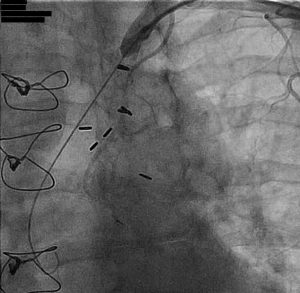
A 57-year-old diabetic woman with a history of three-vessel coronary bypass grafting presented with unstable angina in the form of chest pain occurring at rest. Stress PET-CT showed a dense reversible anterior wall defect and she was referred for urgent cardiac catheterization. Cardiac catheterization was performed via a left radial artery approach. Angiography revealed a…

Read More

EVLA – Endovenous Laser Ablation

Endovenous Laser Ablation, EVLA, is a minimally invasive treatment of chronic venous insufficiency. EVLA works by selective photothermolysis. A laser emitting fiber of varying wavelengths (810-1470 nm) is placed percutaneously within the treated vein. The laser disrupts the vein both directly and indirectly. Certain wavelengths injure the venous wall directly. Other wavelengths heat venous blood…

Read More
Vascular Medicine