Pulmonary Embolism Symptoms

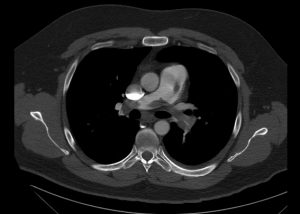
Pulmonary embolism is considered one of the “great masqueraders” of medicine. This means that it is easy to miss pulmonary embolism symptoms if you do not make sure to think about them in advance. Pulmonary Embolism Symptoms First, many pulmonary embolism patients do not experience any symptoms at all. We sometimes see an incidental pulmonary…
Read More
Splenic infarct

Splenic Infarct

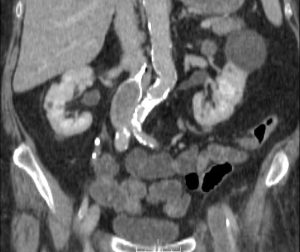
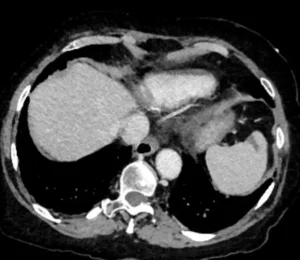
A splenic infarct can be the result of distal embolization, local thrombosis or arterial dissection. Diagnosing and treating the cause is central to management. Splenic Infarct Causes A splenic infarct is the result of one of the following mechanisms: Diagnosis Patients usually present with abdominal pain. But sometimes the finding is incidental. The diagnosis of…

Read More

Deep Vein Thrombosis

A deep vein thrombosis, DVT, is a blood clot in the veins. It is one of the presentations of venous thromboembolism. The other is, of course, pulmonary embolism. A DVT can occur in the veins of the upper or lower extremity. They can also occur in the deep veins of the abdomen. Technically, it can…

Read More

Saddle PE

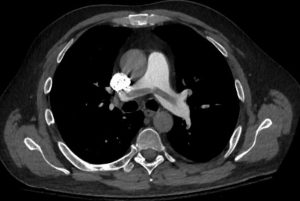
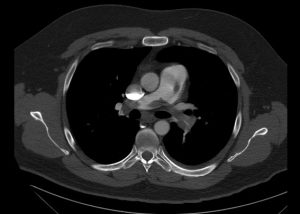
A saddle PE is a pulmonary embolism that is located over the main pulmonary arteries. Perhaps surprisingly, many patients do not have symptoms. In fact, many had imaging for another reason and the PE was an incidental finding. However, sometimes these central clots block cardiac outflow enough to cause syncope, acute right heart failure and…

Read More
Venous thromboembolism in patients with thrombophilia

Mestrual Bleeding On Anticoagulation

There are several unique issues related to anticoagulation that are relevant to women in childbearing age. Menstrual bleeding on anticoagulation is one of those issues. It can range from discomfort to life-threatening blood loss. Managing menstrual bleeding in anticoagulated patients requires a balance of bleeding severity and thrombosis risk. Patient Evaluation for Menstrual Bleeding On…

Read More

Exercise Testing for Pulmonary Embolism

Symptomatic patients who present with pulmonary embolism will present with shortness of breath and chest pain. Acutely, their functional capabilities are limited. While most patients post pulmonary embolism recover, many linger. Some patients who have suffered a pulmonary embolism will report limitations many months after the event. This is most pronounced after submassive- and massive…

Read More

ECMO for Pulmonary Embolism

Extra-Corporeal Membrane Oxygenation (ECMO) has been used to stabilize patients who are hemodynamically unstable for various reasons. Examples include septic patients and patients post massive myocardial infarction. Indeed, some pulmonary embolism (PE) patients require immediate hemodynamic stabilization. Often, these are the sickest of PE patients and without stabilization mortality is high. The idea behind using…

Read More
Vascular Medicine